

Indigenous Products and Practices
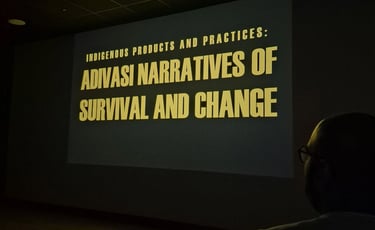
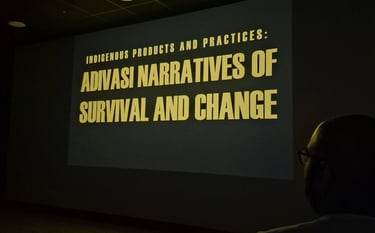
Adivasi Narratives of Survival and Change
A short-documentary by Abhijeet Kumar
Screenings
The documentary was screened as part of the ESRC Festival of Social Science 2025 at Phoenix Cinema and Arts Centre, Leicester. It has also been screened at Queen Mary University of London.
Screenings are typically followed by discussions on documentary practice, visual ethnography, intellectual property law, and the challenges of representing legal conflict through film.
Credits
Directed and Produced by
Abhijeet Kumar
Edited by
Ogulcan Ekiz
Voice Narration
Honey Mariam Jacob

When legal systems fail to recognise what communities consider essential to their survival, how do people respond?
This documentary presents first-person narratives from five Adivasi communities in India — Toda, Bodo, Dongria Kondh, Warli, and Bhil — as they navigate the gap between state law and lived cultural practices.
Through conversations with artists, elders, and community members, the film explores how Indigenous knowledge, artistic traditions, and ecological practices are appropriated, regulated, or misunderstood within modern legal frameworks. A Warli artist reflects on sacred motifs reproduced on commercial merchandise without consent. A Dongria Kondh elder speaks about protecting a sacred mountain. A Bodo elder describes traditional designs that have been copied and marketed globally.
These stories reveal the limitations of existing intellectual property frameworks when confronted with Indigenous systems of stewardship, collective ownership, and cultural responsibility.
Research Context
The documentary emerged from ethnographic field research conducted during my doctoral work at the Centre for Commercial Law Studies, Queen Mary University of London.
My research examines the relationship between intellectual property law, Indigenous knowledge systems, and legal pluralism. The film was developed as a visual extension of that work, using documentary practice to explore how law is experienced in everyday life by communities whose cultural practices do not easily fit within conventional legal categories.
By centring Adivasi voices without academic mediation, the documentary highlights alternative systems of knowledge governance and cultural stewardship that exist alongside formal legal regimes.
Themes
The film engages with several questions central to contemporary debates in law and society:
• Indigenous knowledge and intellectual property
• Cultural appropriation and legal recognition
• Legal pluralism and community governance
• Resistance, stewardship, and narrative assertion
• The limits of formal law in regulating cultural practices